Hiring an AI specialist is expensive: why internal training remains the realistic option for SMBs
AI skills have become the hardest to hire in the world. For an SMB, the answer is not winning the hiring race, it's not running it.
For the first time, AI skills have become the most sought-after and hardest to recruit worldwide, ahead of traditional engineering skills. 72% of employers report difficulty hiring this kind of profile, according to a ManpowerGroup study published in 2026. This finding, already concerning for large corporations with substantial budgets and a recognized employer brand, is even more so for an SMB attempting to compete on the same ground.
The reality is simple to state, even if uncomfortable to accept, a ten-to-fifty-person SMB objectively cannot win a hiring race for AI talent against companies that can offer salaries, prospects, and name recognition it cannot match. Continuing to chase this rare profile on the external market, month after month, ties up recruiting time and leaves a position vacant without solving the underlying problem.
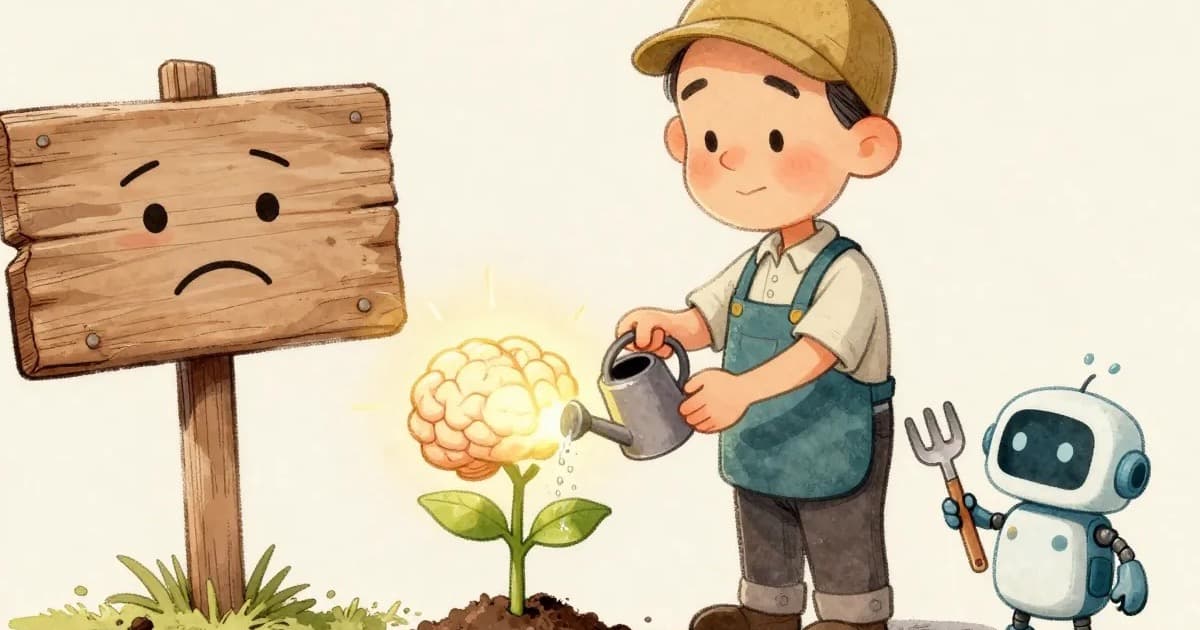
The most realistic alternative is not losing that race differently, it is not running it at all. Training an employee already on staff, who knows the job, the processes, and the company culture, often produces a more useful outcome than a hypothetical external hire. This is in fact the option prioritized by 27% of employers surveyed by ManpowerGroup, ahead of more flexible hours or work location, to address this skills shortage.
Choosing which employee to train matters as much as the decision to train internally itself. The best candidate is not necessarily the one with the most advanced existing technical skills, it is more often the one who shows spontaneous curiosity about digital tools, is respected by peers in their department, and already uses AI on their own initiative in daily work. This employee holds an advantage no external hire has, credibility already earned with colleagues, which considerably eases later adoption by the rest of the team.
There is no universal timeline for turning this employee into a useful AI point person for their department, but field experience shows structured support, rather than simple access to online resources, produces visible results within a few months. The goal is not to train a technical expert capable of building models, but an internal reference point able to identify good use cases, train colleagues on basic uses, and escalate questions beyond their level.
External hiring keeps its relevance in certain specific contexts, particularly for a well-defined, one-off need, a complex technical integration project across several systems for instance, where a freelancer or specialized vendor on a short engagement often proves more realistic and faster than a permanent hire that is hard to fill. The question is therefore not choosing definitively between hiring and training, but reserving external hiring for one-off needs and internal training for lasting ones.
This strategy is not free, the main cost lies in the trained employee's time, temporarily diverted from usual tasks during their upskilling. But that cost remains, in the vast majority of cases observed, markedly lower than an unsuccessful hire after months of searching, or a position left vacant for lack of a matching candidate.
This is what change management should arbitrate project by project rather than through a single policy, the choice between internal upskilling and external resourcing, based on the nature of the need, one-off or lasting, rather than by default. A five-business-day diagnostic identifies the employee best placed to become your internal AI point person.
Frequently asked questions
Are AI skills really the hardest to hire in 2026?
Yes. For the first time, AI skills have become the most sought-after and hardest to recruit worldwide, ahead of traditional engineering skills, according to a 2026 ManpowerGroup study, with 72% of employers reporting hiring difficulties.
Does an SMB stand a chance of hiring a senior AI profile against large corporations?
Objectively limited. Large corporations have budgets and employer brands that let them capture the most experienced profiles first, an SMB competing on that same ground starts at a structural disadvantage.
What is the most realistic alternative for an SMB facing this shortage?
Training an employee already on staff, who knows the job and the company, rather than trying to hire a rare AI skill externally. That is the option prioritized by 27% of employers according to the same study.
What kind of employee is best suited to this internal upskilling?
One already curious about digital tools, respected by peers, and ideally already a spontaneous user of AI in their daily work, rather than someone designated solely for pre-existing technical skills.
How long does it take to train a line employee into an internal AI point person?
There is no universal timeline, but field experience shows a motivated employee, with structured support, can become a useful reference point for their department within a few months, without aiming for full technical expertise.
Does hiring remain relevant in some cases for an SMB?
Yes, particularly for a well-defined, one-off need, a complex technical integration project for instance, where a freelancer or specialized vendor on a short engagement is often more realistic than a permanent hire.
Does this internal training strategy have a hidden cost?
The main cost is the trained employee's time, temporarily diverted from their usual tasks. That cost is generally lower than an unsuccessful hire or a position left vacant for months for lack of a candidate.
At which step of an AI project should this talent strategy decision be made?
The Change Management step includes the choice between internal upskilling and external hiring, a trade-off to make project by project rather than through a single policy applied to the whole company.