The three real barriers to AI in SMBs, and they aren't the ones you think
Data misuse, lack of skills, difficulty finding a use case: Bpifrance Le Lab ranks the real barriers to AI adoption. Team resistance only comes after.
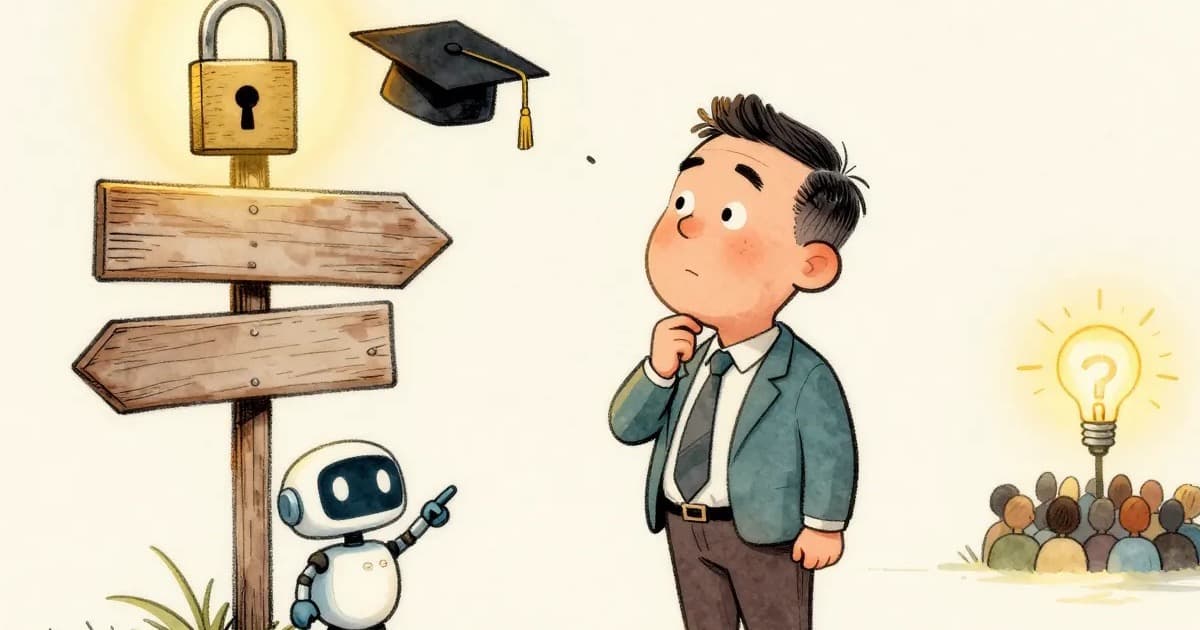
33% of French SMB and mid-sized company leaders cite fear of confidential data misuse as the main barrier to AI adoption, according to the Bpifrance Le Lab study on the topic. Next come lack of skills or training, at 26%, difficulty identifying good use cases, at 23%, and finally team resistance, at 22%. This ranking contradicts an intuition widely shared by leaders before getting started, one that systematically puts human resistance at the top of obstacles to anticipate.
The first barrier, fear of data misuse, is not irrational. It reflects a legitimate worry, seeing confidential information, customer data, financial documents, HR files, sent to a consumer AI tool with no data processing agreement with the publisher, and no clear guarantee about how it will be used afterward. This fear is addressed through a concrete, accessible action, systematically checking for such an agreement before any professional use of a tool, and formalizing a simple list of what can and cannot be entered into it.
The second barrier, lack of internal skills, is often perceived as harder to overcome than it really is. An SMB does not need to hire an external technical expert, rare and expensive in a particularly tight job market for these profiles. An employee already on staff, trained gradually and in a structured way, can become a sufficient internal point person to cover most of the company's everyday needs, without aiming for full technical expertise.
The third barrier, difficulty identifying good use cases, reveals a common methodological mistake rather than an insurmountable obstacle. Many leaders approach AI through the technology, asking what they might do with this or that tool, rather than through the business problem to solve. This approach rarely produces a relevant project. An honest inventory of the company's real business pain points, repetitive tasks, processing delays deemed too long, recurring errors, almost always reveals obvious use cases that had simply never been framed that way before.
Team resistance, real enough at 22%, ranks last in this classification, which should prompt many leaders to reconsider the order of their priorities before launching a project. Many invest heavily, from the start, in change-management actions meant to overcome a still-hypothetical resistance, while the three preceding barriers, left unresolved, will cause project failure regardless of team buy-in anyway.
This hierarchy calls for a different sequencing than the one most SMBs instinctively adopt. Prioritizing data security, upskilling an internal point person, and rigorously identifying a relevant use case, before investing in in-depth change management, avoids pouring resources into a problem that, empirically, often proves less decisive than the other three for a first project's success.
This is exactly what the initial inventory should assess, these four barriers specifically for the company in question, rather than assuming without checking which one deserves priority treatment. Bpifrance Le Lab's ranking is not a universal truth that applies identically to every company, it is a statistical starting point that invites you to check, rather than assume, where your own real obstacle actually lies. A five-business-day diagnostic identifies which of these four barriers weighs most heavily in your company.
Frequently asked questions
What are the main barriers to AI adoption identified by Bpifrance Le Lab, in order?
Fear of confidential data misuse ranks first at 33%, followed by lack of skills or training at 26%, difficulty identifying good use cases at 23%, and team resistance at 22%.
Why does fear of data misuse rank first?
Because it reflects a legitimate and rarely unfounded worry, seeing confidential information sent to a consumer AI tool with no data processing agreement and no guarantee about how the publisher will use it afterward.
Is the lack of internal skills an easy barrier to overcome?
Easier than it seems, an internal point person trained gradually can cover most of an SMB's needs, without requiring an external technical expert who is hard to find and costly to hire.
Why does difficulty identifying a relevant use case hold back so many SMBs?
Because many leaders approach AI through the technology rather than the business problem to solve, an approach that rarely yields a relevant project, unlike an honest inventory of real business pain points, which naturally reveals priority use cases.
Is team resistance really a minor barrier?
It remains a real barrier at 22%, but it ranks last, which contradicts the intuition of many leaders convinced it is the number-one obstacle before even launching a project.
How does an SMB concretely address the fear of data misuse?
By systematically checking for a data processing agreement with the tool's publisher, and formalizing a clear list of what can and cannot be entered into a consumer AI tool.
Should these four barriers be addressed in the order they're ranked?
Not necessarily in that strict order, but addressing the first three, data, skills, use case, before investing heavily in change management aimed at overcoming a still-hypothetical resistance avoids a common sequencing mistake.
How can these barriers be diagnosed before launching a project?
The Inventory step should assess these four barriers specifically for the company in question, rather than assuming, without checking, which one is the main obstacle to address first.